
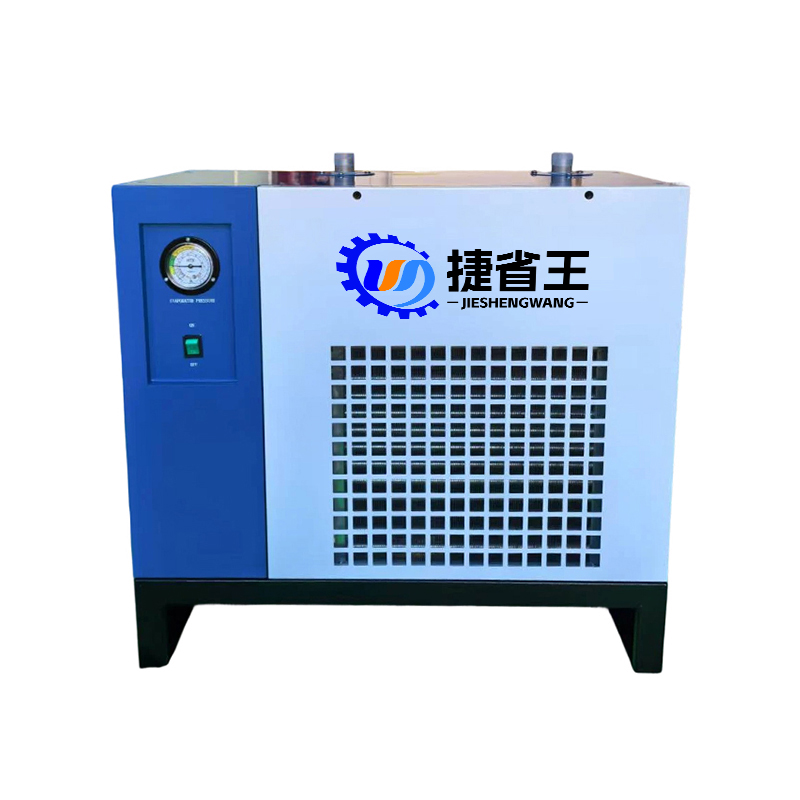


What are the groundbreaking applications of antibacterial and antifungal technology in normal temperature refrigerated dryers?
Release Time : 2025-12-08
The normal temperature refrigerated dryer achieves a breakthrough in antibacterial and antifungal technology, moving from passive protection to active intervention. Its core breakthroughs can be summarized as a microbial inhibition mechanism under low-temperature conditions, synergistic multi-dimensional antibacterial technologies, and the deep application of materials science. These technologies not only solve the problem of insufficient antibacterial efficiency in traditional dryers at low temperatures but also construct a comprehensive health protection system through cross-innovation of physical, chemical, and biological technologies.
The microbial inhibition mechanism under low-temperature conditions is the technological cornerstone of the normal temperature refrigerated dryer. Traditional dryers rely on high-temperature drying to kill bacteria, but high temperatures can easily damage clothing fibers, causing irreversible damage, especially to delicate materials such as wool and silk. Normal temperature freezing technology, by precisely controlling the temperature within the 0-10℃ range, utilizes the low-temperature environment to inhibit the metabolic activities of bacteria and mold. At this temperature, the enzyme activity of microorganisms is significantly reduced, cell membrane fluidity decreases, and the reproduction rate is greatly slowed. Some models further incorporate cold plasma technology, using active oxygen species in low-temperature plasma to destroy the cell walls of microorganisms, achieving highly efficient sterilization in a low-temperature environment. This non-thermal sterilization method protects clothing materials and avoids shrinkage and deformation problems that may be caused by high temperatures.
Multi-dimensional antibacterial technologies working in synergy are key to improving protective efficacy. Modern normal temperature refrigerated dryers no longer rely on a single technology but combine multiple antibacterial methods, such as UV ultraviolet rays, ozone, and silver ions, with a low-temperature environment. For example, one brand's model simultaneously releases specific wavelengths of UV ultraviolet rays during the drying process, penetrating the microbial cell nucleus and destroying the DNA structure for deep sterilization; at the same time, a trace amount of ozone is generated through an ozone generator, utilizing its strong oxidizing properties to decompose organic matter within bacteria. This dual action increases the sterilization rate to over 99%. The application of silver ion antibacterial technology further extends the protection period. By coating the inner wall of the drum with a nano-silver coating, silver ions are continuously released to inhibit bacterial growth, maintaining a clean environment inside the drum even after the drying cycle is complete.
Breakthroughs in materials science provide a physical barrier for antibacterial and anti-mildew properties. Traditional dryers' sealing strips and filters are breeding grounds for bacteria. New normal temperature refrigerated dryers use antibacterial materials instead of conventional plastics. For example, the AMT antibacterial window pad embeds organic antibacterial agents into the material matrix, forming a long-lasting antibacterial layer with an inhibition rate of over 99% against common pathogens such as E. coli and Staphylococcus aureus. The antibacterial water tank utilizes a composite technology of inorganic antibacterial agents and polymer materials, releasing antibacterial ions upon contact with moisture to prevent mold growth caused by limescale buildup. Furthermore, the application of a micron-level deep filter not only improves lint collection efficiency, but its special antibacterial coating also intercepts and kills airborne allergens, providing extra protection for sensitive individuals.
The introduction of intelligent sensing technology makes antibacterial and anti-mold measures more targeted. Some high-end models are equipped with humidity, temperature, and bacterial colony sensors that can monitor the condition of clothing and environmental parameters in real time. When excessive humidity or abnormal bacterial colony concentration is detected, the antibacterial program is automatically activated, adjusting the cold air circulation intensity, extending the low-temperature drying time, or increasing the UV irradiation dose for precise intervention. This dynamic protection mechanism avoids energy waste while ensuring that clothes of different materials are dried and sterilized under optimal conditions.
The antibacterial and anti-mildew technology of the normal temperature refrigerated dryer has formed a complete chain of coverage from the drying process to the storage environment. During the drying stage, low temperature inhibition and active sterilization reduce microbial residue; during the storage stage, circulating air inside the drum and antibacterial materials maintain long-term cleanliness. Some models also have a "drum self-cleaning" function, which uses the combined action of high-temperature steam and ozone to periodically clean the inside of the drum, completely eliminating the risk of secondary pollution.
These technological breakthroughs not only improve the user experience but also promote the health-oriented upgrade of the dryer industry. For families with infants, the elderly, or members with allergies, the sterile environment provided by the normal temperature refrigerated dryer significantly reduces the incidence of respiratory diseases and skin allergies; in humid areas or during the rainy season, its anti-mildew function effectively prevents odors and mold spots from clothes caused by prolonged dampness. From an industry perspective, these innovations provide technological support for the transformation of dryers from "functional appliances" to "health appliances," and may become a standard feature in the high-end market in the future.